
Skip to content
Vaughn Associates, Inc.

Solution

Data Acquisition Systems

Rugged, synchronized data acquisition for strain, acceleration, temperature and vehicle bus data in lab and field.

What is a data acquisition system?

A data acquisition (DAQ) system is the hardware and software that measures signals from sensors, digitizes them on a common timebase and stores them for analysis. In test engineering, a DAQ system is the bridge between the physical event, such as a pothole strike, a rocket motor firing or a wing bending, and the data engineers use to make design decisions.

Test DAQ differs from plant control I/O. It samples far faster, synchronizes many channels precisely, conditions sensitive sensors like strain gauges and accelerometers, and often has to survive vibration, temperature extremes and vehicle power in the field.

How data acquisition works

Every channel passes through the same basic chain:

  1. Sensor excitation: Bridge sensors need a stable excitation voltage, and IEPE accelerometers need constant-current power.
  2. Conditioning: Amplification, bridge completion, offset balance and anti-alias filtering prepare the signal for conversion.
  3. Conversion: An analog-to-digital converter, typically 24-bit in modern test systems, samples each channel at a set rate.
  4. Synchronization: Channels, modules and digital sources such as CAN and GPS share a timebase, so events line up across the dataset.
  5. Storage and software: Data goes to a PC, internal memory or SD card, then to analysis tools in standard formats.
Signal type Conditioning required Typical sample rate
Strain gauge and load cell Excitation, bridge completion, shunt calibration Hundreds to thousands per second
IEPE accelerometer and microphone Constant-current supply, AC coupling Thousands to tens of thousands per second
Thermocouple Cold-junction compensation, filtering A few to tens per second
Voltage and 4–20 mA Scaling, isolation Application-dependent
Tachometer or encoder Pulse counting, speed calculation Event-based
CAN, GPS and IMU Protocol decoding, time alignment Message-based

The practical challenge is combining all of these in one synchronized recording without a tangle of separate instruments. Universal-input modules and distributed expanders connected by a single cable for power, data and sync simplify large installations.

Common applications

  • Military and heavy vehicle testing: Army ground vehicle programs that need hundreds of strain and acceleration channels, relevant to Huntsville’s defense test community.
  • Automotive durability and NVH: road-load data acquisition, fatigue testing and ride quality work for the Southeast’s assembly plants and suppliers.
  • Aerospace structural testing: strain surveys and load monitoring on airframes and space hardware.
  • Rail, marine and transportation: in-service measurement on railcars and boats.
  • University research: flexible, multi-sensor systems for student and faculty test programs.

Choosing the right data acquisition system

Buy for the test program, not the brochure’s maximum channel count. Start with an inventory of sensors, then decide where the system will operate. A durability test that runs for weeks unattended in a truck has very different needs from a lab modal survey. Pay close attention to strain conditioning, synchronization across modules and file formats. Losing time converting data or re-running tests because of a clipping or aliasing error costs more than hardware.

Manufacturers we represent for data acquisition

Mars Labs of Laurel, Maryland, has built rugged DAQ systems since 1999. Its US-built Titan platform uses 16-channel universal-input modules that record stand-alone to SD cards or combine through CAT6-connected channel expanders into synchronized systems of hundreds of channels. Mars Labs has supported durability and NVH programs for Ford and large-channel-count systems for the US Army.

Prosig pairs its DATS acquisition hardware, from the four-channel DATS-solo to the stackable DATS-hyper12, with analysis software for NVH, modal, fatigue and rotating machinery work.

Get local application support

Our Huntsville-based area managers focus on aerospace, defense and automotive test. We can help size channel counts, plan sensors and cabling, and set up demonstrations. Visit engineering support, request a quote, or find your area manager on the territories page.
Product types

Types of Data Acquisition Systems we can help you specify.

01

Universal-input DAQ modules

Software-configurable channels accept strain gauges, load cells, IEPE accelerometers, voltages, thermocouples and tachometer signals, replacing racks of single-purpose conditioners. Mars Labs' Titan BMS16 and CMS16 each provide 16 channels, with the CMS16 reaching 60,000 samples per second per channel.

02

Stand-alone in-vehicle recorders

Low-power modules record directly to SD cards from vehicle or battery power, so tests run without a laptop attached. Titan modules operate on 11–32 VDC and draw about 3 W before sensor loads.

03

High-channel-count synchronized systems

Channel expanders and stackable front ends combine many modules on one timebase for large structures and vehicles. Mars Labs' CPX08 reaches 384 analog channels, and Prosig's DATS-hyper12 scales past 1,000 channels.

04

Dynamic signal (IEPE) acquisition

High-rate inputs with constant-current excitation for accelerometers and microphones support vibration, shock and acoustic work. Mars Labs' CAI16 offers 16 IEPE channels, and Prosig's DATS-solo and DATS-tetrad bring 24-bit portable acquisition.

05

Thermocouple and temperature modules

Dedicated inputs with cold-junction compensation handle multi-point temperature surveys on engines, brakes and thermal tests. Mars Labs' TCx16 provides 16 J, K or T thermocouple channels with optional GPS.

06

Vehicle bus, GPS and IMU interfaces

Digital interfaces time-align CAN and CAN FD messages, GPS position and IMU motion with analog channels. Mars Labs' EDP09 decodes SAE J1939 and ISO 15765, and Prosig's DATS-CANetic records CAN and OBD-II data into DATS.

07

Analog output and playback modules

Analog outputs pass measured signals to controllers, lab equipment or road-simulation rigs. Mars Labs offers the 16-channel DAC16 module and an internal isolated DAC card.

08

Acquisition and analysis software

Software handles sensor setup, calibration, live display, recording and export or analysis. Mars Labs' Titan Control Software exports to RPC III, MATLAB, HDF5, WAV and CSV, and Prosig's DATS adds signal processing and reporting.

Selection guide

How to choose Data Acquisition Systems

  1. 01

    List every signal type and count, including strain, IEPE, voltage, thermocouple, tach, CAN and GPS, and leave spare capacity for the next program.

  2. 02

    Set sample rate from the highest frequency of interest with anti-alias filtering, and confirm per-channel rates at your full channel count.

  3. 03

    For strain, check bridge completion (quarter, half, full), excitation range and shunt calibration support.

  4. 04

    Decide where the system runs: stand-alone in a vehicle on battery power, networked across a structure, or at a lab bench with a PC.

  5. 05

    Verify synchronization between modules and between analog and digital data when channels are distributed.

  6. 06

    Confirm the environmental ratings, power draw, connectors and cable lengths for your installation.

  7. 07

    Make sure export formats and APIs match your analysis tools, such as RPC III for road simulation or MATLAB and HDF5 for scripting.

Standards & regulations

  • SAE J1939 (heavy-vehicle CAN communication)
  • ISO 15765 (diagnostic communication over CAN)
  • ISO 11898 (CAN and CAN FD)

Industries

FAQ

Data Acquisition Systems: frequently asked questions

What is a data acquisition system?

A data acquisition (DAQ) system measures physical signals from sensors and converts them into digital data a computer can store and analyze. It includes signal conditioning to excite and amplify sensors, analog-to-digital converters, a synchronized timebase, storage and software. Test engineers use DAQ systems to record strain, acceleration, temperature, pressure, speed and vehicle network data during development and validation testing.

What sample rate does my data acquisition system need?

The sampling theorem requires a rate above twice the highest frequency present, but practical systems sample well above that and use anti-alias filters. For frequency-domain vibration analysis, about 2.5 times the analysis bandwidth is common. For capturing the true shape and peak of shock transients in the time domain, ten times or more is typical. Slow signals such as temperature need only a few samples per second.

What is quarter-bridge completion for strain gauges?

A single strain gauge forms only one arm of a Wheatstone bridge. Quarter-bridge completion supplies precision resistors inside the DAQ module to complete the other three arms, so an individual gauge can be wired directly to the input. Half- and full-bridge configurations use two or four active gauges for better temperature compensation and sensitivity. Mars Labs' Titan modules offer on-board completion for 350-ohm gauges.

Should I use a stand-alone data logger or a PC-based DAQ system?

A stand-alone logger records to internal memory or an SD card without a computer attached, which suits in-vehicle durability runs, long field tests and locations where a laptop would not survive. A PC-connected system provides live displays and immediate analysis for lab work and troubleshooting. Many modern systems, including Mars Labs' Titan modules, can operate both ways with the same hardware.

Can a DAQ system record CAN bus and GPS data in sync with analog sensors?

Yes. Mars Labs' EDP09 digital pod and expansion cards add CAN and CAN FD with SAE J1939 and ISO 15765 decoding, GPS, IMU, encoder and wheel force transducer data, which Mars Labs states is synchronized with analog channels. Prosig's DATS-CANetic records CAN signals such as engine speed alongside accelerometer and microphone channels. Common time alignment links vehicle events to measured loads.

Who sells data acquisition systems in Huntsville and the Southeast?

Vaughn Associates, Inc., headquartered in Huntsville, Alabama, represents Mars Labs Titan data acquisition and Prosig DATS systems across all of its territories, including Alabama, Georgia, South Carolina, Tennessee, Arkansas, Mississippi, Louisiana, Florida, North Carolina, Virginia, Maryland and Washington, D.C. The Territories page lists your local area manager for demos and quotes.

Related insights

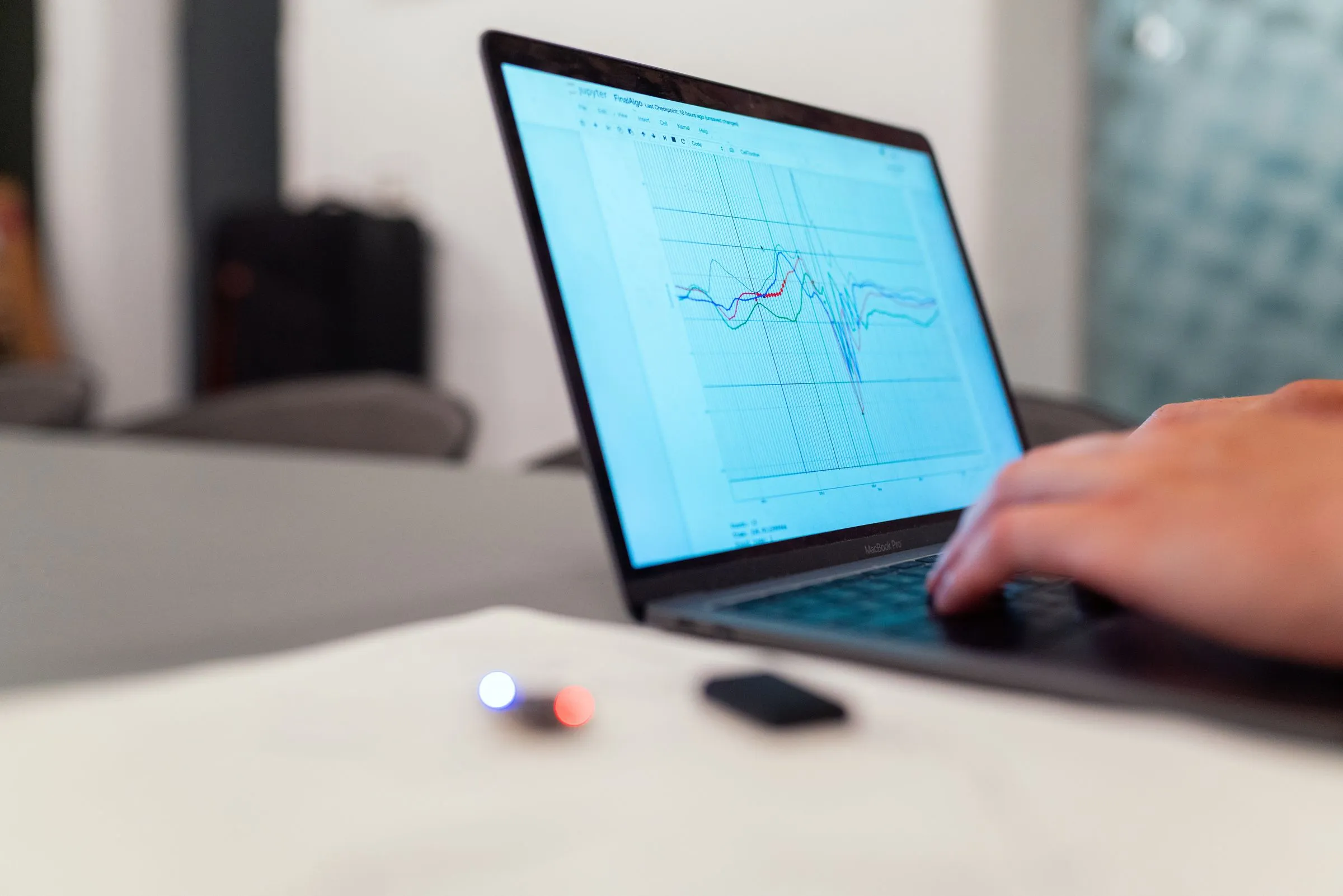
A person working on a graph analysis on a laptop for data monitoring and research.
Product Insights

Choosing a Data Acquisition System for Vehicle Testing

Application help

Need help specifying Data Acquisition Systems?

Describe your application. A Vaughn sales engineer will recommend options from the manufacturers we represent and coordinate a quote.

We respond within one business day. We never share your information.