
Skip to content
Vaughn Associates, Inc.

Solution

Joysticks, Grips & Human-Machine Interfaces

Solid-state joysticks and operator controls built for billions of cycles, deep water and explosive atmospheres.

What are joysticks, grips and human-machine interfaces?

Joysticks, grips, pedals, yokes and similar input devices are the human-machine interfaces (HMIs) that translate an operator’s hand or foot commands into electrical signals for a vehicle, robot, camera or computer. Rugged HMI controls are engineered to keep that command channel precise and reliable through vibration, water, dirt, temperature extremes and millions of operations.

In unmanned systems, military vehicles, subsea equipment and mining machines, the input device is safety-critical. A noisy potentiometer or a leaking seal can mean an unintended movement or a mission abort, which is why these programs specify controls very differently from office peripherals.

How joystick sensing technologies work

Input devices differ mainly in how they sense motion or force:

  • Potentiometers: A wiper slides along a resistive track. They are inexpensive and familiar, but contact wear limits life and generates noise over time.
  • Hall-effect and other magnetic sensors: A magnet moves relative to a sensor without contact, which greatly extends life compared with potentiometers.
  • Solid-state strain elements: The structure itself contains sensing elements that measure tiny strains from applied force or deflection. With nothing rubbing, life is extremely long, and the device can be fully sealed. Bokam builds its products on this approach.
  • Optical sensing: Light-based encoders or sensors measure position without contact and are used in some yoke designs.
Sensing method Contact wear Sealing potential Typical fit
Potentiometer Yes Moderate Low-cycle, cost-driven controls
Magnetic (Hall-effect) No Good General industrial and vehicle controls
Solid-state strain element No Excellent, including welded housings Submersible, explosive, extreme-life controls
Optical No Good Yokes and precision position sensing

Beyond sensing, output electronics matter. Microprocessor signal conditioning allows field reprogramming of sensitivity and calibration. Redundant channels with built-in test let a safety-critical controller detect a sensor fault, and standard interfaces such as USB, CAN, Ethernet and analog simplify integration.

Common applications

  • Unmanned systems: ground control stations and handheld controllers for UAVs, UGVs and ROVs, supporting Huntsville’s defense and unmanned systems community.
  • Military ground vehicles: drive-by-wire steering, throttles and pedals, turret and gimbal control.
  • Naval, shipbuilding and subsea: vessel controls, diver-held interfaces and ROV consoles for Gulf Coast shipyards and offshore work.
  • Aerospace and simulation: yokes, inceptors and pedals for flight controls and simulators, including Florida’s simulation and training industry.
  • Mining and hazardous locations: sealed operator controls for underground and explosive-atmosphere machinery.
  • Medical and industrial: sealed cursor controls for decontamination and heavy-duty consoles.

Choosing the right HMI controls

Start with the operator and the mission, then work outward to the environment and interface. The right feel, including force versus displacement, travel and return-to-center, drives usability and training. Environment and approvals often eliminate most catalog options. For drive-by-wire and other safety-critical functions, redundancy and fault reporting should be defined with the supplier early, because they shape the mechanical and electrical design.

Manufacturers we represent for joysticks and HMI controls

Bokam Engineering of Santa Ana, California, has designed rugged input devices since 1980 and builds them in an AS9100-certified facility. Its solid-state strain-element sensing, with no wipers or rubbing contacts, supports ratings from 10 million to more than one billion cycles. The line includes force and position joysticks, all-welded submersible and explosive-environment controls, sealed mice and trackballs, drive-by-wire pedals, programmable yokes and the Universal Operator Control Unit. Custom grips, force profiles and outputs are a core part of Bokam’s work.

Get local application support

Vaughn Associates helps defense, marine and industrial programs define requirements and coordinate custom designs with Bokam’s engineers. Visit engineering support, request a quote, or find your area manager on the territories page.


Product types

Types of Joysticks, Grips & Human-Machine Interfaces we can help you specify.

01

Force and position joysticks

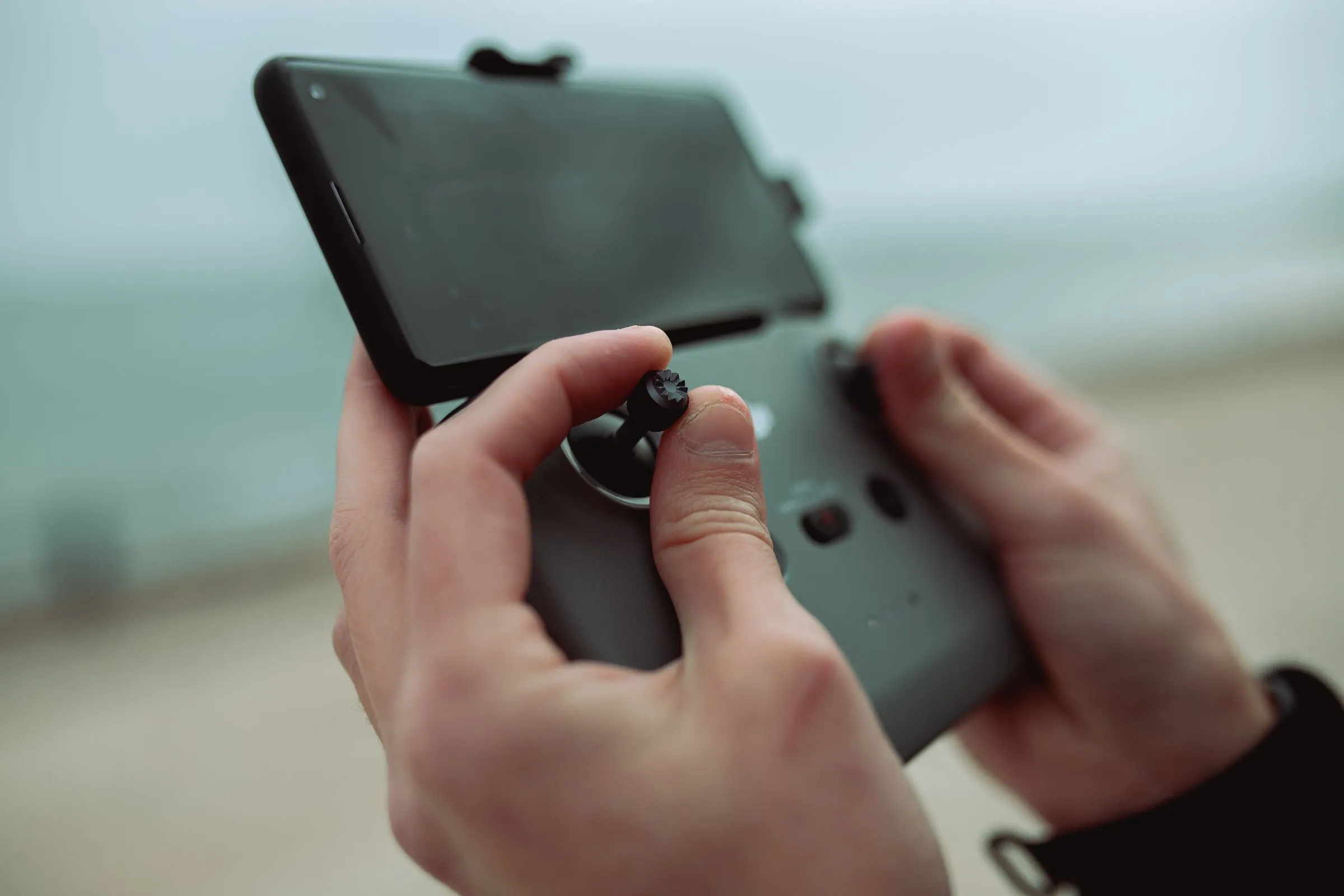
Joysticks that respond either to applied force or to stick deflection, from thumb-operated minis to full palm grips. Bokam's DS-Series MINI and Gadol joysticks offer USB, analog and CAN outputs, with multi-channel redundancy and built-in test on the Gadol.

02

Explosion-proof and mining joysticks

Hermetically sealed controls for underground mines and flammable atmospheres. Bokam's all-welded, potted zero-volume joysticks and High REL Explosive Environments Mouse are described by Bokam as MSHA and Class I, Division 1 certified.

03

Submersible operator controls

Welded stainless input devices for divers, ROV pilot stations and wet-mounted vessel controls. Bokam qualifies its submersible joysticks, mouse and Miniature Neptune device to more than 6,500 psi external pressure.

04

Sealed trackball and mouse replacements

Solid-state cursor controls with no rolling balls or moving sensing parts resist dirt, fluids and decontamination. Bokam's Force Ball Mouse and Solid-State Track Ball suit medical, industrial and contaminated workstations.

05

Multi-axis input devices

Compact solid-state modules that sense up to four axes for OEM instruments and control panels. Bokam's US-Series devices carry a minimum rating of 10 billion cycles.

06

Drive-by-wire pedals and throttles

Programmable pedals and throttles with adjustable reaction force and travel for flight and ground-vehicle control. Bokam's solid-state pedals and Extreme Life Throttle are rated for at least 10 million cycles, with redundant isolated outputs available.

07

Yokes, inceptors and grips

Modular flight and steering controls with single- or dual-axis motion, return-to-zero options, haptic feedback and grip-mounted triggers. Bokam's programmable yokes range from about ±15° to ±60° of travel, with ±360° steering configurations.

08

Universal operator control units

Rugged handheld controllers combine programmable joysticks, triggers and buttons with an embedded computer and display for piloting UAVs, UGVs and ROVs. Bokam's UOCU runs Windows or Linux and is rated from −40 °C to 85 °C.

Selection guide

How to choose Joysticks, Grips & Human-Machine Interfaces

  1. 01

    Decide whether operators should command by force (isometric) or by displacement, and define travel, breakout force and return-to-center feel.

  2. 02

    Specify expected cycle life and duty; contacting potentiometers wear, while non-contact and solid-state sensing last far longer.

  3. 03

    Match the output to the control system: analog voltage, USB, CAN, Ethernet or switched outputs, plus the required channel redundancy and built-in test.

  4. 04

    Define the environment completely, including water depth and pressure, temperature, shock and vibration, dust, washdown and hazardous-location or MSHA approvals.

  5. 05

    Plan the grip ergonomics early: button and trigger layout, glove use, handedness and mounting envelope.

  6. 06

    For safety-critical drive-by-wire, work through fault detection and redundancy requirements with the supplier before finalizing the design.

  7. 07

    Ask whether sensitivity and calibration can be adjusted in firmware, which simplifies tuning during integration.

Standards & regulations

  • AS9100 aerospace quality management (Bokam quality system)
  • MSHA approval for underground mining equipment
  • NEC Class I, Division 1 hazardous locations
  • MIL-STD-1472 (human engineering design criteria for military systems)
  • MIL-STD-810H (environmental engineering and laboratory tests)

Industries

FAQ

Joysticks, Grips & Human-Machine Interfaces: frequently asked questions

What is the difference between a force joystick and a position joystick?

A position (displacement) joystick moves through a range of travel, and its output follows how far the stick is deflected. A force (isometric) joystick barely moves; it measures how hard the operator pushes, which gives very fast, precise response and a compact, sealed package. Bokam builds both types on the same solid-state strain-element sensing, so designers can choose the feel that suits the task.

Why do solid-state joysticks last longer than potentiometer joysticks?

A potentiometer joystick relies on a wiper sliding across a resistive track, so contact wear eventually causes noise, dead spots and failure. Solid-state designs have no rubbing parts in the sensing element. Bokam uses embedded strain elements that measure force or deflection directly, and it rates many joysticks and submersible devices beyond one billion cycles, with pedals, throttles and yokes at 10 million cycles or more.

What does redundancy with built-in test mean for drive-by-wire controls?

In drive-by-wire systems, a failed sensor could command unintended motion. Redundant designs measure each axis with two or more independent channels, and built-in test compares those channels and reports faults so the vehicle controller can react safely. Bokam offers multi-channel redundancy, up to quad-redundant sensing on yokes, and built-in test reporting on products such as the Gadol joystick.

Can joysticks be used underwater or in explosive atmospheres?

Yes, when designed for it. Bokam's all-welded stainless joysticks and mice use potted, zero-volume cavities, which Bokam lists as MSHA certified and Class I, Division 1 certified, and its submersible controls are qualified to more than 6,500 psi. Confirm the exact approval, gas group and marking for your model, and review connectors and cable penetrations against your depth or area classification.

Can a joystick, grip or yoke be customized for a specific vehicle program?

Yes. Customization is central to Bokam's business. Engineers can specify grip shape and buttons, travel, force profile, return-to-zero behavior, output protocol and redundancy, building on Bokam's existing joystick, pedal, yoke and sensor platforms. Design, fabrication and testing happen in Bokam's AS9100-certified Santa Ana, California facility, which helps custom programs move from concept to OEM production.

Who sells rugged joysticks and operator controls in Huntsville and the Southeast?

Vaughn Associates, Inc., headquartered in Huntsville, Alabama, represents Bokam Engineering joysticks, grips, pedals, yokes and operator control units across all of its territories, from Alabama, Tennessee and Florida to Louisiana, the Carolinas, Virginia, Maryland and Washington, D.C. The Territories page lists your local area manager for program support.

Application help

Need help specifying Joysticks, Grips & Human-Machine Interfaces?

Describe your application. A Vaughn sales engineer will recommend options from the manufacturers we represent and coordinate a quote.

We respond within one business day. We never share your information.