

Skip to content
Vaughn Associates, Inc.

Solution

Continuous Emissions & Mercury Monitoring (CEMS)

Gas, mercury, particulate and flow monitoring that keeps stacks compliant and data defensible.

What is a continuous emissions monitoring system?

A continuous emissions monitoring system (CEMS) is the combination of sampling hardware, analyzers and data software that measures pollutants leaving a stack in real time and produces the records regulators require. Typical CEMS measure SO2, NOx, CO, CO2 or O2, and depending on the source, also mercury, HCl, particulate matter and volumetric flow.

A CEMS does more than read a gas value. It must prove, day after day, that its data is valid. That means automated calibration checks, quality-assured data substitution when a monitor is down, and emission calculations that match the averaging periods written into the facility’s permit.

How CEMS technology works

There are three basic architectures:

  • Dry extractive: A heated probe and sample line carry flue gas to a conditioning system that filters and dries it before the analyzers. This setup is well proven for SO2, NOx, CO, CO2 and O2.
  • Hot-wet extractive and close-coupled: The sample stays above its dew point, or is conditioned right at the stack, so water-soluble gases such as HCl and NH3 survive to the analyzer.
  • In-situ: The analyzer or its optics mount directly on the stack or duct and measure the gas without extracting it.

Inside the cabinet, each gas is matched to a measurement principle:

Measurement Common principle Typical CEMS use
SO2, NO, CO, CO2 NDIR gas filter correlation Part 60 and Part 75 compliance
NOx Chemiluminescence Low-NOx combustion sources
HCl, NH3, multi-component FTIR MACT sources, ammonia slip
Total hydrocarbons Heated FID VOC and organic HAP limits
O2 diluent Paramagnetic or zirconia Correcting concentrations
Mercury Thermal conversion with atomic absorption Utility MATS, cement NESHAP
Particulate Light scatter, electrodynamic, beta PM CEMS, bag leak detection
Flow Ultrasonic time-of-flight Mass emission rates

Mercury monitoring deserves special mention. Mercury appears in flue gas in both elemental and oxidized forms. An Hg CEMS converts it all to elemental mercury, typically with high-temperature thermal conversion, then measures it by atomic absorption at trace µg/m³ levels. Zeeman background correction, the specialty of Ohio Lumex, separates true mercury absorption from interference caused by SO2 and other gases.

Common applications

  • Power generation: coal- and gas-fired units across the Southeast report SO2, NOx, CO2 and flow under Part 75, and coal units add mercury under MATS.
  • Pulp and paper mills: recovery boilers, lime kilns and power boilers in Alabama, Georgia, Mississippi and Louisiana.
  • Gulf Coast refining and chemical plants: heaters, boilers, flares and thermal oxidizers along the Mississippi River corridor.
  • Cement kilns and waste combustion: mercury, HCl and particulate under NESHAP rules.

Choosing the right CEMS

A defensible CEMS starts with the permit and the stack. Gas composition, moisture, temperature and dust loading determine whether dry extractive, hot-wet or in-situ sampling will produce stable data. Required ranges and certified low scales determine the analyzer. After installation, the real cost shows up in quality assurance: calibration gases, audits, RATAs and technician hours. Compare lifetime maintenance, not just purchase price, and consider how quickly spare parts and factory service reach your site.

Manufacturers we represent for emissions monitoring

ENVEA, formerly Altech Environment USA, supplies analyzers and complete integrated systems from its Geneva, Illinois operation. Its range includes the MIR 9000 and MIR IS multi-gas analyzers listed for 40 CFR 60 and 75, FTIR and heated FID analyzers, SM-5 mercury CEMS, particulate monitors, STACKFLOW ultrasonic flow monitors and reporting software. Many ENVEA products carry both US EPA compliance claims and TÜV QAL1 or MCERTS certification.

Ohio Lumex of Solon, Ohio, has specialized in trace mercury measurement since 1999. It offers the 915J continuous mercury monitor, Method 30B and PS-12B sorbent traps and samplers, an ISO/IEC 17025-accredited laboratory, and field engineers who support mercury RATAs.

Get local application support

Our Baton Rouge-based area managers specialize in analyzers, CEMS and gas detection for refineries, chemical plants and power stations. We can review your permit requirements, visit the stack and coordinate with the factory on system design. Visit engineering support, request a quote, or find your area manager on the territories page.
Product types

Types of Continuous Emissions & Mercury Monitoring (CEMS) we can help you specify.

01

Extractive multi-gas CEMS analyzers

Rack- or wall-mount analyzers measure several flue gases from a conditioned sample and form the core of most compliance systems. ENVEA's MIR 9000 uses NDIR gas filter correlation for up to ten gases, including SO2, NOx, CO, CO2 and HCl, with built-in paramagnetic O2.

02

In-situ and close-coupled analyzers

Stack-mounted analyzers condition the sample at the stack, avoiding long heated sample lines on wet or corrosive gas. ENVEA's MIR IS integrates permeation drying and measures up to ten gases.

03

FTIR multi-gas analyzers

Fourier-transform infrared analyzers resolve many IR-active species, such as HCl, NH3 and organics, from a single spectrum. ENVEA offers several FTIR platforms for MACT compliance, ammonia slip and abatement monitoring.

04

Continuous mercury monitors (Hg CEMS)

Hg CEMS convert all mercury in the flue gas to elemental form and measure it continuously by atomic absorption. ENVEA's SM-5 uses thermal conversion with no reagents, and Ohio Lumex's 915J is designed for coal-fired boilers, cement kilns and incinerators.

05

Sorbent trap mercury monitoring

Paired sorbent traps collect mercury over a sampling period for laboratory analysis under Performance Specification 12B or Method 30B. Ohio Lumex supplies the traps, OLM30B sampler, M324 trap analyzer and an ISO/IEC 17025-accredited lab.

06

Particulate monitors and bag leak detectors

Light-scattering and electrodynamic probes track dust emissions and warn of failing filter bags. ENVEA's QAL 181 forward-scatter monitor is referenced for PS-11 correlation, while the STACK 990 and Dust Alarm 40 are listed as MACT bag leak detectors.

07

Ultrasonic stack flow monitors

Ultrasonic time-of-flight monitors measure flue-gas velocity across the duct so concentration data can be converted to mass emission rates. ENVEA lists its STACKFLOW 200 and 400 as PS-6 compliant.

08

Emissions data acquisition and reporting

Data acquisition and handling software validates analyzer data, flags exceedances and generates compliance reports and QA records. ENVEA offers its WEX emissions software along with complete integrated CEMS packages.

Selection guide

How to choose Continuous Emissions & Mercury Monitoring (CEMS)

  1. 01

    Start from the permit: list each pollutant, averaging period, emission limit and applicable rule (Part 60, Part 63, Part 75) before comparing analyzers.

  2. 02

    Choose the architecture for your gas stream: dry extractive for clean, stable stacks, and in-situ or hot-wet extractive where moisture, HCl or NH3 would be lost in a chiller.

  3. 03

    Pick ranges so emission limits and span values fall in the measurable portion of scale, and confirm certified low ranges for mercury and particulate.

  4. 04

    For mercury, weigh an Hg CEMS against a sorbent trap program based on data availability needs, lab turnaround and technician time.

  5. 05

    Plan for stack flow if you must report mass emissions in lb/hr or tons, and check that sampling locations meet EPA siting criteria.

  6. 06

    Budget for ongoing QA, including daily calibration drift checks, quarterly audits or linearity tests, annual RATAs, calibration gases and spare parts.

  7. 07

    Confirm how the DAHS will report to your agency and connect to your plant historian or DCS.

Standards & regulations

  • EPA 40 CFR Part 60 (NSPS), Appendix B performance specifications and Appendix F QA
  • EPA 40 CFR Part 75 (Acid Rain Program monitoring)
  • EPA 40 CFR Part 63 (NESHAP, including MATS and Portland cement)
  • Performance Specification 6 (flow rate monitors)
  • Performance Specification 11 (particulate matter CEMS)
  • Performance Specification 12A (mercury CEMS)
  • Performance Specification 12B and EPA Method 30B (sorbent trap mercury)
  • EN 15267 QAL1 and UK MCERTS product certification

Industries

FAQ

Continuous Emissions & Mercury Monitoring (CEMS): frequently asked questions

How does a continuous emissions monitoring system work?

A CEMS continuously measures pollutants leaving a stack and records the results for compliance reporting. An extractive system pulls gas through a heated probe and sample line, conditions it and routes it to analyzers, while an in-situ system measures at the stack itself. A diluent monitor (O2 or CO2) and often a flow monitor let the data acquisition system correct concentrations and calculate emission rates.

What is the difference between a CEMS and a PEMS?

A CEMS physically measures stack gas with analyzers. A predictive emissions monitoring system (PEMS) measures no gas at all; it uses process data such as fuel flow, load and temperatures in a model that estimates emissions, and it must be validated against reference testing. PEMS are accepted for certain sources, such as some gas turbines and boilers, under 40 CFR Part 60 Performance Specification 16 or Part 75 provisions.

What is a RATA?

A relative accuracy test audit (RATA) compares CEMS readings against simultaneous measurements made by an independent test team using EPA reference methods. The results must fall within the relative accuracy limits of the applicable performance specification. RATAs are performed at certification and then periodically, typically annually, and they are supplemented by daily calibration drift checks and quarterly cylinder gas audits or linearity checks.

Should I use a mercury CEMS or sorbent traps?

A mercury CEMS, such as ENVEA's SM-5 or Ohio Lumex's 915J, reports concentration continuously and gives operators real-time data for process control. A sorbent trap system under Performance Specification 12B collects mercury on paired traps that are analyzed afterward, which lowers capital cost but delays results. Plants with variable mercury levels or tight limits often prefer continuous monitoring, while stable sources may favor traps.

Why does in-situ or hot-wet sampling matter for HCl and ammonia?

Water-soluble gases such as HCl, HF and NH3 dissolve into condensate when a sample is chilled and dried, which biases results low. Hot-wet extractive systems keep the entire sample path above the dew point, and close-coupled designs such as ENVEA's MIR IS condition the gas at the stack with permeation drying. Both approaches preserve these species and shorten response time.

Who sells CEMS and mercury monitoring equipment in Louisiana and the Southeast?

Vaughn Associates, Inc. represents ENVEA (formerly Altech Environment USA) in its Louisiana and Gulf Coast territory, served from the Baton Rouge office. Ohio Lumex mercury monitors, sorbent traps and lab services are represented across Vaughn's Southeast territories, with North Carolina covered in the Carolinas and Virginia territory. The Territories page lists the area manager for your state.

Related insights

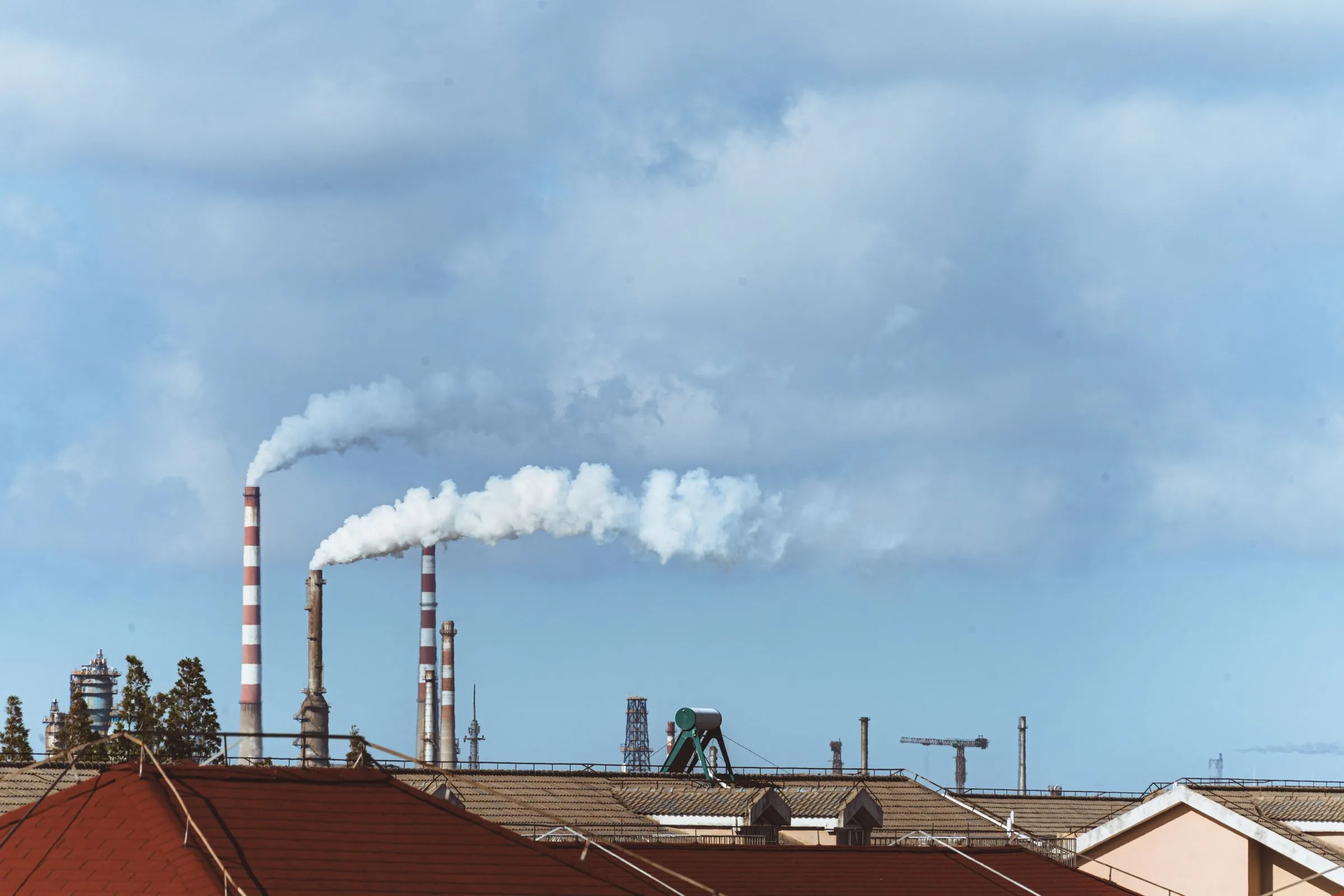
Factory chimneys emitting smoke over rooftops on a clear day, illustrating urban pollution.
Industry Insights

CEMS Basics: EPA Part 60 vs. Part 75 Emissions Monitoring

Application help

Need help specifying Continuous Emissions & Mercury Monitoring (CEMS)?

Describe your application. A Vaughn sales engineer will recommend options from the manufacturers we represent and coordinate a quote.

We respond within one business day. We never share your information.