
Skip to content
Vaughn Associates, Inc.

Solution

Process Gas & Liquid Analyzers

Online analyzers that turn process streams into real-time composition data for control, quality and safety.

What is a process analyzer?

A process analyzer is an online instrument that automatically measures the chemical composition or properties of a gas or liquid stream while the process runs. It sends results to the control system in seconds or minutes, rather than hours later from a lab. Analyzers are used for control, product quality, safety and environmental compliance.

Every installation has three parts: a sample tap or in-situ probe, a sample conditioning system that delivers a representative sample, and the analyzer itself. Analyzer engineers often say the sample system decides success, because the most accurate detector cannot correct a sample that has condensed, lagged or been contaminated on its way in.

How process analyzer technologies work

No single technology covers every stream. The measurement principle is chosen for the analytes, required speed and background matrix:

Technology How it measures Best suited to
Gas chromatography (GC) Separates components on a column, then detects each peak Full composition, heating value, natural gas and RNG
GC-IMS GC separation followed by ion mobility detection ppb-level siloxanes, odorants, volatiles
FTIR Infrared spectrum of the whole sample Many IR-active gases at once, including HCl and NH3
NDIR Absorption at a fixed infrared band CO, CO2, SO2, moisture in solvents
Flame ionization (FID) Ions formed when hydrocarbons burn in a hydrogen flame Total hydrocarbons, VOC
Paramagnetic and zirconia Oxygen’s magnetic properties or ion conduction O2 in process and combustion gas
Zeeman atomic absorption Mercury absorption with magnetic background correction Mercury in natural gas, LNG, hydrogen
Optical luminescence Luminescent dyes respond to oxygen or pH Dissolved O2 and pH in bioprocess

Speed and selectivity trade off against each other. A GC gives complete speciation but reports on a cycle time. Spectroscopic analyzers respond almost continuously but can be affected by overlapping absorbers. Many plants use both: a fast optical analyzer for control and a GC for verification.

Common applications

  • Gulf Coast refining and chemical plants: hydrocarbon and VOC monitoring, solvent recovery, thermal oxidizer performance and mercury removal verification for gas processing.
  • Renewable natural gas: landfill and farm digester projects across the Southeast measure methane, CO2, oxygen and siloxanes to meet pipeline interconnect specifications.
  • Natural gas and LNG: mercury-in-gas monitoring upstream of cryogenic heat exchangers.
  • Sulfuric acid and power plants: acid dew point monitoring for corrosion control.
  • Research and life sciences: optical oxygen and pH sensing in bioreactors and university labs.

Choosing the right process analyzer

Begin with what the measurement must accomplish and how fast. A safety interlock on oxygen in a hydrocarbon header has very different needs from a daily heating value report. Next, document the stream completely, including the components you do not care about, because they cause interference and fouling.

Then size the sample system: tap location, transport time, heat tracing, filtration, fast loop and calibration injection. Finally, look at ownership. Carrier gases, calibration standards and consumables accumulate over time, and an analyzer that operators trust gets used, while one that drifts gets bypassed.

Manufacturers we represent for process analyzers

ENVEA brings decades of gas analysis experience from its emissions monitoring work, with FTIR, heated FID, NDIR, chemiluminescence and paramagnetic analyzers, mercury monitors for natural gas, and engineered sample conditioning. Its US line was expanded by the 2023 acquisition of California Analytical Instruments.

Ohio Lumex builds its Elemental Instruments line of process GCs, RNG and siloxane monitoring systems, mercury-in-gas analyzers and the Ei4200 acid dew point monitor. It backs them with an ISO/IEC 17025-accredited laboratory, onsite gas-quality sampling and, since 2026, an automation division for PLC and SCADA integration.

Get local application support

Our analyzer specialists can review stream data, sample tap locations and hazardous-area requirements, then coordinate a recommendation and quote with the factory. Visit engineering support, request a quote, or find your area manager on the territories page.
Product types

Types of Process Gas & Liquid Analyzers we can help you specify.

01

Process gas chromatographs

A process GC separates a gas sample into its components on a column and quantifies each one, reporting composition, heating value and relative density. Ohio Lumex's Ei800 Series uses a fast thermal-conductivity detector for fuel gas and mud gas analysis.

02

RNG and biogas quality monitoring systems

Integrated systems measure the gas composition, heating value and trace contaminants such as siloxanes that pipeline interconnects specify. Ohio Lumex's Ei2200 combines a process GC with GC-IMS siloxane measurement and is available in a Class I, Division 2 configuration.

03

GC-IMS trace volatile analyzers

Gas chromatography paired with ion mobility spectrometry detects trace volatile compounds at ppb levels, with the selectivity of a chromatograph. Ohio Lumex supplies GC-IMS instruments for siloxane, odor and flavor analysis.

04

Mercury-in-gas analyzers

Online mercury analyzers protect aluminum heat exchangers and catalysts in natural gas, LNG and hydrogen service. Ohio Lumex offers the Ei2500 system built on Zeeman atomic absorption, and ENVEA offers the MMS-NG multipoint monitor.

05

Acid dew point monitors

An acid dew point monitor measures the temperature at which sulfuric acid actually condenses from flue or process gas, rather than estimating it from composition. Ohio Lumex's Ei4200 supports corrosion control, scrubber approach temperature and leak alarms in sulfuric acid plants.

06

FTIR multi-component gas analyzers

FTIR analyzers identify and quantify many infrared-absorbing compounds from one spectrum, which suits solvent recovery, abatement and carbon capture pilots. ENVEA offers several FTIR platforms, including a heated sampler for hot, wet streams.

07

Heated FID hydrocarbon and VOC analyzers

A flame ionization detector burns the sample in a hydrogen flame and measures the ions produced, giving a fast total hydrocarbon or VOC reading. ENVEA's Graphite 52M hot/wet FID and HC51M cover process and engine test applications.

08

Optical oxygen, pH and temperature sensors

Luminescence-based optical sensors measure dissolved or gaseous oxygen, pH and temperature without consuming the analyte. Ohio Lumex is the sole US and Canada distributor for PyroScience sensors used in bioprocess, lab and marine research.

Selection guide

How to choose Process Gas & Liquid Analyzers

  1. 01

    Define the decision the analyzer supports, whether closed-loop control, product quality, safety interlock or custody transfer, since each demands different speed, accuracy and redundancy.

  2. 02

    Characterize the full stream, not just the target analyte: background components, moisture, particulates, pressure, temperature and possible condensation all affect technology choice.

  3. 03

    Match the principle to the measurement: GC for full speciation and heating value, FTIR or NDIR for infrared-active gases, FID for total hydrocarbons, GC-IMS for ppb volatiles.

  4. 04

    Treat the sample system as half the project; transport lag, heat tracing, filtering and a bypass loop usually determine response time and uptime.

  5. 05

    Confirm hazardous-area requirements such as Class I, Division 1 or 2 or ATEX zone, and whether the analyzer needs a purged enclosure or shelter.

  6. 06

    Plan validation and upkeep: calibration gases, carrier and fuel gases, consumables, and whether an accredited lab can verify results.

Standards & regulations

  • EPA Renewable Fuel Standard (RFS) gas-quality compliance
  • 40 CFR Part 1065 (engine emissions test analyzers)
  • EN 12619 (total organic carbon by flame ionization)
  • NEC Class I, Division 2 hazardous locations
  • ISO/IEC 17025 (accredited laboratory verification)

Industries

FAQ

Process Gas & Liquid Analyzers: frequently asked questions

What is the difference between a process analyzer and a laboratory analyzer?

A process analyzer is installed at or near the pipe and measures a continuously drawn sample automatically, delivering results in seconds to minutes as a 4–20 mA, Modbus or network signal the control system can act on. A laboratory analyzer measures grab samples that someone collects and carries to the lab. Lab results are often more detailed, but they arrive too late for real-time control.

How does a process gas chromatograph work?

A process GC injects a precise volume of sample into a carrier gas stream that flows through one or more columns. Each component travels through the column at a different speed, so components exit one at a time. A detector, such as a thermal-conductivity detector, measures each peak, and software converts the peak areas to concentrations and calculated properties such as heating value.

Why is sample conditioning so important for process analyzers?

Most analyzer problems trace back to the sample, not the analyzer. The sample system must deliver a representative, clean sample at the right pressure, temperature and flow, quickly enough to be useful. Condensation can strip out soluble components, dead volume adds lag, and particulates foul cells and valves. A well-designed system includes a fast loop, filtration, heat tracing where needed and provisions for calibration.

What are siloxanes and why are they measured in biogas and RNG?

Siloxanes are silicon-containing compounds that come from personal care and industrial products and end up in landfill and wastewater digester gas. When the gas burns, siloxanes form hard silica deposits that damage engines, turbines and catalysts, so pipelines and equipment makers set strict limits. Ohio Lumex's GC-IMS-based systems measure speciated siloxanes at trace levels to verify gas treatment performance.

What is an acid dew point monitor used for?

An acid dew point monitor measures the temperature at which sulfuric acid condenses from a gas stream. Operators use it to keep air heater cold-end and duct temperatures above the dew point to prevent corrosion, without running hotter and wasting energy. It also supports scrubber approach temperature control and leak detection in sulfuric acid plants. Ohio Lumex's Ei4200 measures the dew point directly rather than calculating it.

Who sells process gas analyzers in Louisiana and the Gulf Coast?

Vaughn Associates, Inc. represents ENVEA analyzers in its Louisiana and Gulf Coast territory, served from the Baton Rouge office, and represents Ohio Lumex process monitors across its Southeast territories, with North Carolina covered in the Carolinas and Virginia territory. The Territories page lists the area manager who can review your application and coordinate quotes with the factory.

Related insights

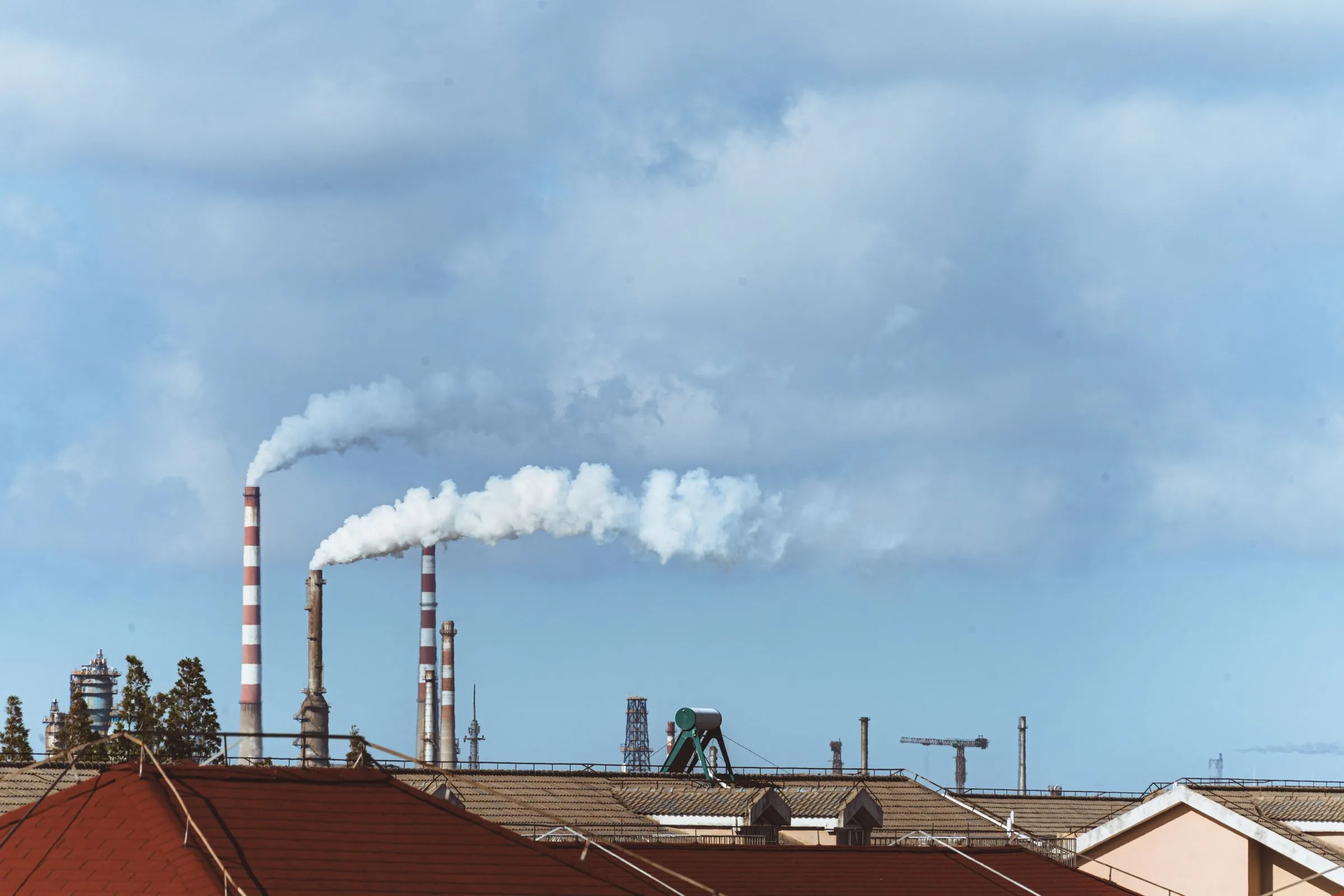
Factory chimneys emitting smoke over rooftops on a clear day, illustrating urban pollution.
Industry Insights

CEMS Basics: EPA Part 60 vs. Part 75 Emissions Monitoring

Application help

Need help specifying Process Gas & Liquid Analyzers?

Describe your application. A Vaughn sales engineer will recommend options from the manufacturers we represent and coordinate a quote.

We respond within one business day. We never share your information.