

Skip to content
Vaughn Associates, Inc.

Industry

Energy & Utilities

Emissions, combustion, temperature and turbine-generator instrumentation for fossil, nuclear and renewable generation and water utilities.

Instrumentation for Energy & Utilities

Power producers need to measure what leaves the stack, how efficiently fuel is burned, and whether critical equipment is operating inside safe limits. That means continuous emissions and mercury monitoring for compliance, combustion analyzers and burner controls for efficiency, qualified temperature and pressure instruments for nuclear service, and vibration data for turbines and pumps.

These measurements carry real consequences. Missing emissions data can bring substitute values and reporting headaches, excess air shows up directly in heat rate, and an unqualified replacement sensor cannot go into a safety-related loop. Water and wastewater utilities add their own needs, from lift station level to hydrogen sulfide monitoring.

The energy and utilities landscape in the Southeast

The Southeast generates power from nearly every fuel. Commercial nuclear stations operate in nearly every state Vaughn covers, and the Tennessee Valley Authority runs a large system of nuclear, fossil and hydroelectric plants. Investor-owned, municipal and cooperative utilities operate coal, natural gas combined-cycle and biomass units throughout the region.

Industrial cogeneration and steam plants serve refineries, chemical plants and paper mills, especially along the Gulf Coast. Water and wastewater utilities support fast-growing metro areas from Atlanta and Nashville to Raleigh, Orlando and Northern Virginia, and Oak Ridge National Laboratory in Tennessee is a center for energy and advanced reactor research.

Solutions we provide

How Vaughn Associates supports energy and utilities teams

Vaughn Associates is an independent manufacturer’s representative and MANA member. Our Gulf Coast team specializes in analytical and emissions instrumentation, and our sales engineers across the territory support power, gas detection and test applications.

  • Application review: we help define measurement ranges, qualification needs and system scope before you request pricing.
  • Quote coordination: we work with factory engineers on configurations, documentation and delivery. Customers typically purchase directly from the manufacturer.
  • Demos and evaluations: we arrange demonstrations, rentals or evaluations where the manufacturer supports them.
  • Follow-through: we stay involved through startup questions and connect you with factory service.

Start a conversation on the For Engineers page or find your area sales manager on the territories page.


Challenges we help solve

What energy & utilities teams need from their instrumentation.

01

Emissions compliance under 40 CFR Parts 60, 63 and 75

Fossil-fired units continuously monitor pollutants such as NOx, SO2 and CO2 along with O2 and stack flow, and many coal-fired units must also track mercury. Monitor downtime can force conservative substitute data under Part 75.

02

Boiler and burner efficiency

Excess air wastes fuel and raises NOx. Utility and industrial boilers need in-situ O2 and combustibles measurement tied to fuel/air ratio control and certified flame safeguards.

03

Nuclear-qualified measurement and obsolescence

Safety-related temperature and pressure instruments must be qualified to IEEE 323 and IEEE 344, and many installed models are no longer produced, so plants need qualified replacements.

04

Generator cooling hydrogen supply

Hydrogen-cooled generators need a reliable, high-purity makeup supply. Cylinder and tube-trailer deliveries add handling, storage and logistics burdens.

05

Rotating machinery health

Turbine generators, boiler feed pumps and fans need vibration monitoring and diagnostics that catch developing faults before they cause a forced outage.

Manufacturers serving energy & utilities

Formerly Altech Environment U.S.A.

ENVEA

Emissions, mercury, particulate and process monitoring, from single analyzers to complete EPA-oriented CEMS packages.

  • Continuous Emissions & Mercury Monitoring (CEMS)
  • Process Gas & Liquid Analyzers

Ohio Lumex

Mercury, gas-quality and emissions measurement instruments backed by an accredited laboratory and field testing services.

  • Continuous Emissions & Mercury Monitoring (CEMS)
  • Process Gas & Liquid Analyzers

Formerly LAMTEC Meß- und Regeltechnik für Feuerungen GmbH & Co. KG

LAMTEC

German combustion management, flame safeguard and in-situ flue gas measurement for safer, cleaner and more efficient industrial burners.

  • Combustion Control & O2 Trim
  • Process Gas & Liquid Analyzers

Formerly Ultra Electronics Nuclear Sensors & Process Instrumentation (NSPI)

Curtiss-Wright Round Rock

Aerospace RTDs, nuclear-qualified temperature and pressure instrumentation, and fiber-optic products engineered in Round Rock, Texas, since 1968.

  • Temperature Sensors & RTDs
  • Pressure Transducers & Transmitters

Formerly Proton OnSite

Nel Hydrogen

PEM and alkaline electrolysers that produce high-purity hydrogen on site, from compact generators to 100 MW-class plants.

  • On-Site Hydrogen Generators

Prosig

DATS noise and vibration analysis software with portable data acquisition hardware, developed in the UK since 1977.

  • Noise & Vibration Analysis (NVH)
  • Data Acquisition Systems

RDP Electrosense

LVDTs, load cells, pressure transducers and signal conditioning from an independent displacement-sensing specialist founded in 1966.

  • LVDT & Displacement Sensors
  • Load Cells, Force & Torque Sensors
  • Pressure Transducers & Transmitters

Spectre Corp

Ohio-built pressure transducers and transmitters, individually calibrated for stable accuracy in industrial and defense service.

  • Pressure Transducers & Transmitters

Delphian Corporation

Fixed-point combustible and toxic gas detection, from smart single-point monitors to networked multi-point systems.

  • Gas Detection Systems

Instrumented Sensor Technology

Self-contained shock, vibration and motion data recorders for capturing real-world transport and field environments.

  • Shock & Vibration Data Recorders

FAQ

Energy & Utilities: common questions

Which analyzers are used in a 40 CFR Part 75 CEMS?

A typical Part 75 system combines SO2, NOx and CO2 or O2 analyzers with a stack flow monitor and a data acquisition and handling system. ENVEA states that its MIR 9000 extractive and MIR IS in-situ analyzers comply with 40 CFR 60 and 75, and that its STACKFLOW monitors meet PS-6. Each installation still has to pass certification tests such as RATAs and linearity checks.

How do coal-fired units measure mercury emissions?

Units generally use either a mercury CEMS or sorbent trap monitoring. ENVEA states that its SM-4 and SM-5 continuous mercury monitors meet Performance Specification 12A. Ohio Lumex supplies sorbent traps for Method 30B and PS-12B, trap samplers, an in-house trap analyzer and accredited laboratory analysis, and its field engineers support mercury monitor RATAs.

What can replace an obsolete Rosemount 1151 transmitter in a nuclear plant?

Curtiss-Wright Round Rock, formerly Weed Instrument and Ultra Electronics NSPI, offers the fully analog DTC3 as a drop-in for non-safety 1151 applications using the same bracket, and the DTN2070 for Class 1E service. Its nuclear RTDs and transmitters are qualified to IEEE 323 and IEEE 344. Confirm qualification documentation for your application with the factory.

Who provides instrumentation support for power plants in the Southeast?

Vaughn Associates, Inc. supports utilities and industrial power producers from its Huntsville, Alabama headquarters and Baton Rouge, Louisiana office, covering eleven states and Washington, D.C. Its sales engineers help specify CEMS, mercury monitoring, combustion controls, nuclear-qualified sensors and hydrogen generators, then coordinate quotes and technical reviews with each manufacturer. Find your rep at /territories/.

Related insights

Factory chimneys emitting smoke over rooftops on a clear day, illustrating urban pollution.
Industry Insights

CEMS Basics: EPA Part 60 vs. Part 75 Emissions Monitoring

Detailed view of camshaft inside an engine block illustrating mechanical engineering.
Product Insights

How LVDTs Work and When to Choose One Over Other Sensors

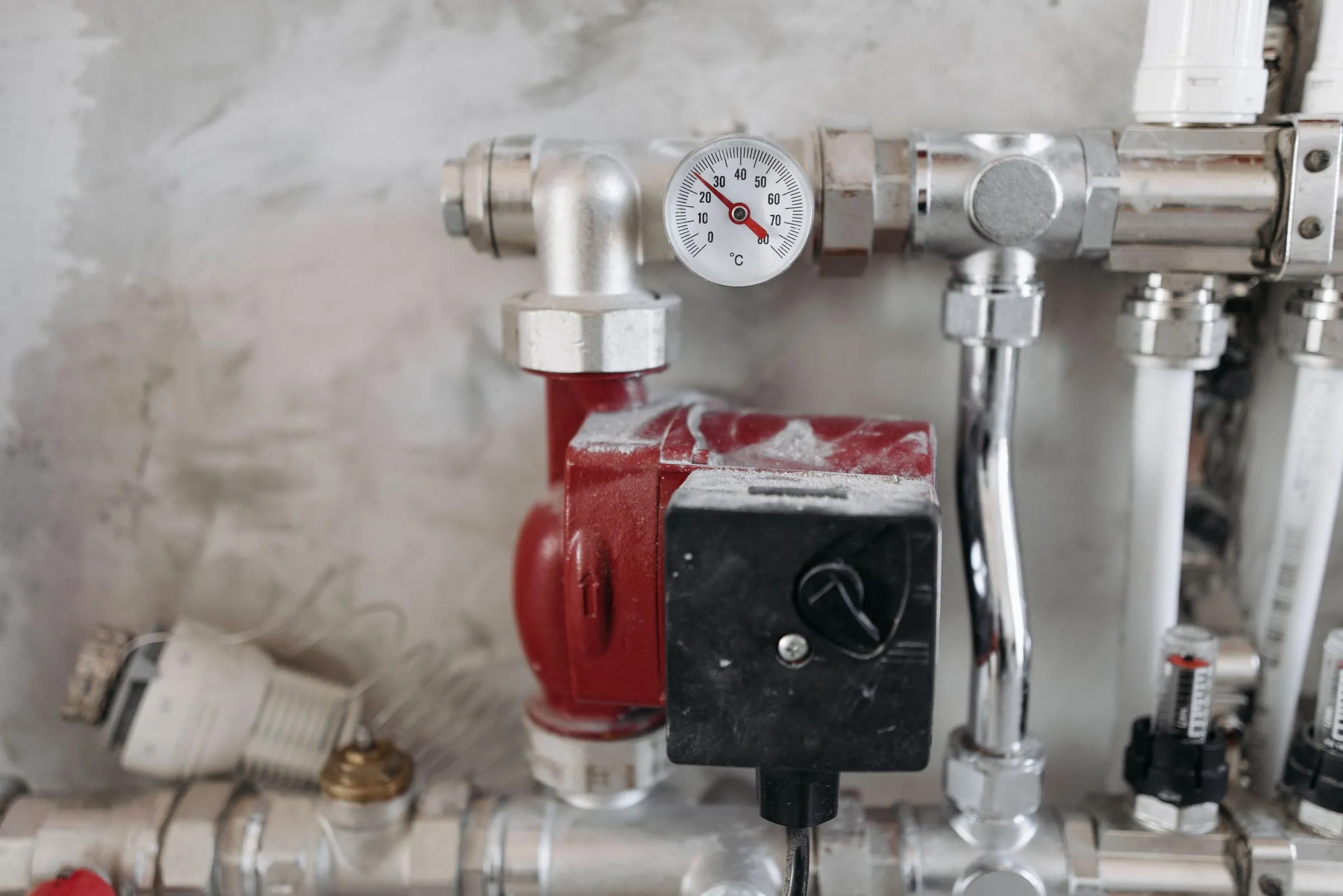
Close-up view of an industrial plumbing system featuring a pressure gauge and steel pipes.
Application Notes

O2 Trim and CO Control for Boilers: How They Save Fuel

Energy & Utilities

Talk to a sales engineer who knows energy & utilities.

Tell us about your plant, lab or program. We’ll connect you with the right manufacturer and product.

We respond within one business day. We never share your information.